


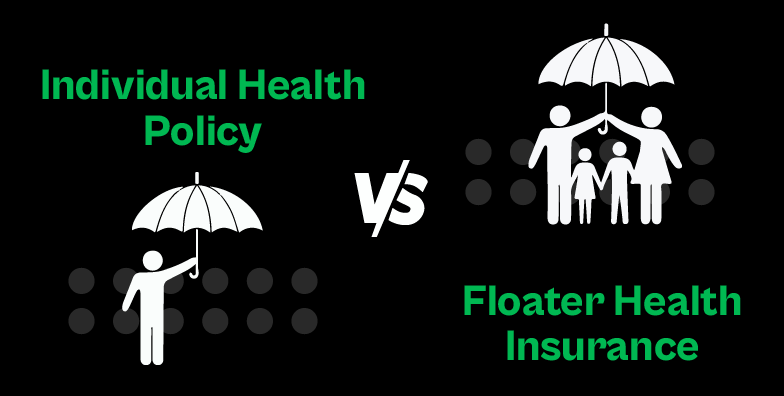
Nowadays, every family wants to avoid financial worries in the event of a medical emergency. When purchasing health insurance, choosing between a family floater and an individual policy can be difficult. A family floater plan shares a single sum assured among family members, while an individual policy provides a separate policy for each member. A floater is better for young families, but a separate policy is better for older families.
Nowadays, every family wants to avoid financial worries during a medical emergency. But when it comes to health insurance, the biggest question is: should they buy separate policies for each member or a single family floater plan for everyone? Both aim to provide protection against medical expenses, but their methods and benefits differ slightly.
What is a family floater plan?
A floater plan, also known as a family floater, offers a single sum insured that is shared among all family members. It typically covers spouses, children, and sometimes parents or siblings.
For example, if there are four members in a family, instead of taking separate cover of ₹5 lakh for each one, the same family can take a family floater plan of ₹10 lakh which will be applicable to all.
What do buyers look for today?
In the past, people used to choose a policy based solely on the premium. But now, the mindset has changed. According to experts, it’s not just about the premium anymore. Families want plans that are flexible, offer wellness benefits, and are digitally accessible. People are now looking for coverage that includes preventive health checkups, mental wellness, and OPD (Outpatient Department) benefits. They are also paying attention to factors like room rent limits, co-payments, and hospital networks.
Simply put, families are now looking for real value over a low-cost plan.
When is a family floater plan right?
| When is it appropriate | When not to take |
| Young nuclear families with a low likelihood of claims | Families with elderly or frequently treated members |
| Couples who are thinking of having children in the future | Where a member already has a chronic disease |
| Those who want to get the job done with a single policy and renewal | Those who want separate protection for each member |
If one family member (such as an elderly or sick person) incurs a significant medical expense, the remaining insurance cover is limited. Therefore, in such cases, a combination of separate policies or a floater with top-up cover is considered preferable.

