


April 5 Credit Date Set for 23rd Installment
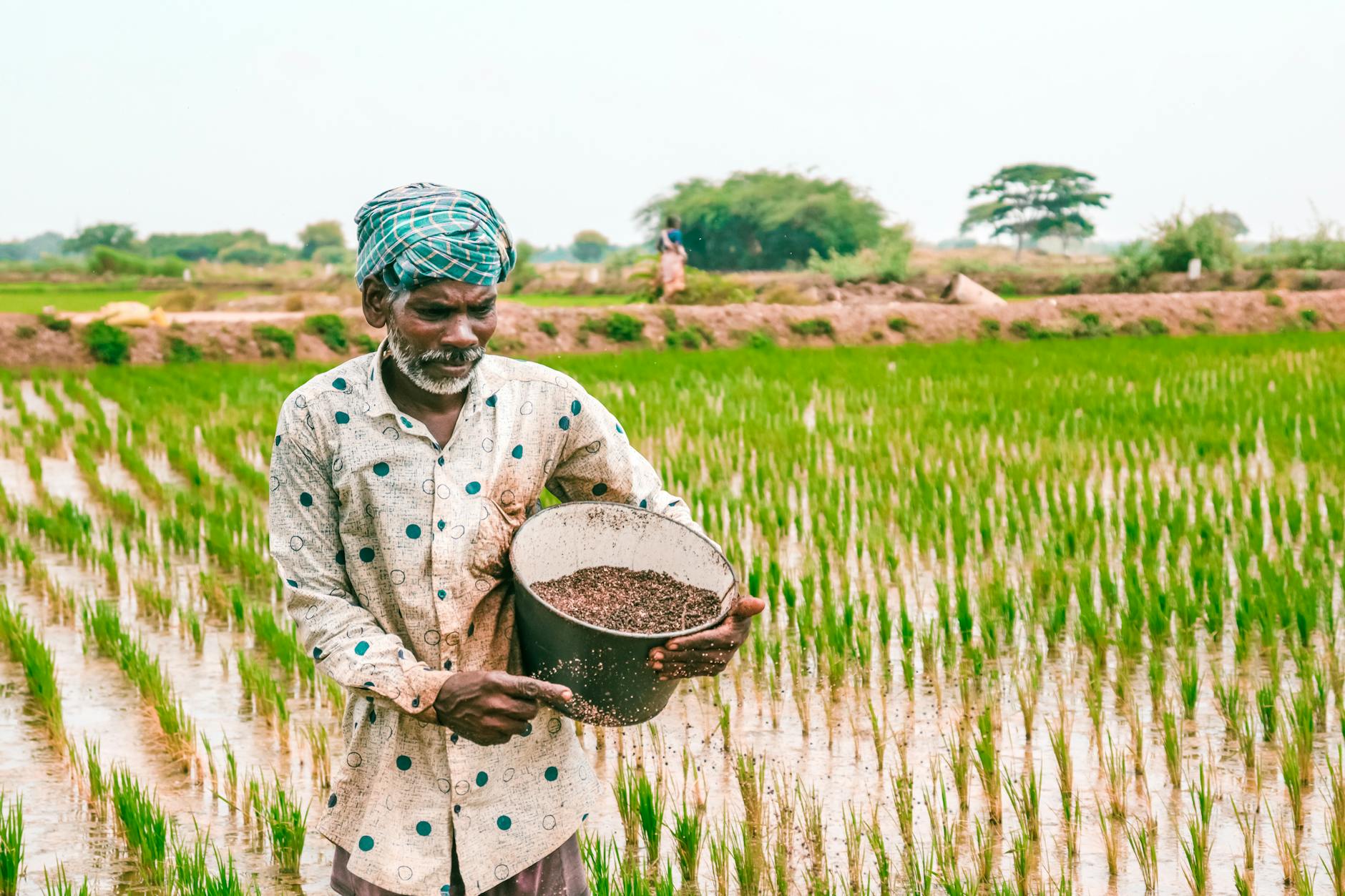
The 23rd installment of ₹2,000 under the PM Kisan Samman Nidhi Yojana will be credited to beneficiaries’ bank accounts on April 5, 2026. This date was confirmed in a press release from the Ministry of Agriculture & Farmers Welfare on March 28, 2026. Over 11.2 crore small and marginal farmers across India will receive this tranche. It’s the third disbursement for the financial year 2025-26, completing the annual commitment of ₹6,000 per family. This timing aligns with the pre-monsoon sowing season, providing crucial liquidity for purchasing seeds and fertilizers.
Launched by Prime Minister Narendra Modi on February 24, 2019, the scheme aims to augment farm income through direct cash transfers. Finance Minister Nirmala Sitharaman has consistently allocated ₹90,000 crore annually in Union Budgets for its funding. As of March 31, 2026, the cumulative disbursement has crossed ₹1.36 lakh crore across 22 previous installments. The payments are made directly into beneficiaries’ Aadhaar-seeded bank accounts via the National Payments Corporation of India’s (NPCI) IMPS platform, ensuring swift and transparent delivery without intermediaries.
Scheme Reach and Beneficiary Landscape
Uttar Pradesh leads in beneficiary count with over 1.8 crore enrolled farmers, followed by Bihar (1.2 crore) and Maharashtra (1.1 crore). The scheme’s eligibility criteria mandate cultivable landholding of up to 2 hectares, verified through state land records. An official from the agriculture ministry stated that 85% of identified beneficiaries have their Aadhaar numbers seeded in the PM Kisan portal as of January 2026. However, this leaves approximately 1.7 crore farmers whose payments are pending due to authentication lapses, often stemming from mismatched land records or inactive bank accounts.
The government has undertaken a special drive to correct land record anomalies in states like Rajasthan and Madhya Pradesh. In a Lok Sabha reply on March 15, 2026, Minister Narendra Singh Tomar noted that 15% of beneficiary files require updates. Common issues include missing mutation records after land sales or incomplete digitization of decades-old pattaries. The PM Kisan helpline (155261) and the grievances portal (pmkisan.gov.in) logged 2.1 lakh complaints in FY 2025-26, with 78% resolved within 30 days.
Economic Impact and Rural Consumption
The steady flow of ₹6,000 annually has measurable effects on rural demand. A 2025 survey by the Indian Council for Research on International Economic Relations (ICRIER) found that PM Kisan beneficiaries increased spending on food grains by 12% and on diesel for farm equipment by 8% post-transfer. This direct cash injection supports agricultural investment without distorting cropping patterns. For context, the ₹6,000 annual amount equals roughly 15 days of wages for an agricultural laborer under the MGNREGA rate of ₹400 per day in 2026.
But the scheme’s design intentionally avoids linking transfers to specific inputs, trusting farmer autonomy. This contrasts with input subsidies like fertilizer vouchers. The cash transfer model has been praised by the World Bank in its 2025 India Development Update for reducing leakages. Yet, exclusion errors remain a concern. In villages of Gujarat’s Kutch district, farmer Ramesh Patel, 62, said, “We got the installment this week. It helps, but many sharecroppers in our area are left out because their names aren’t in the land records.”
Linkages to Financial Inclusion and Insurance
The DBT mechanism of PM Kisan indirectly strengthens financial inclusion, a pillar for insurance product adoption. With ₹6,000 directly deposited, farmers are more likely to maintain active bank accounts, a prerequisite for purchasing insurance. For instance, the Pradhan Mantri Fasal Bima Yojana (PMFBY) premiums are often paid via bank mandates. A senior executive at a rural-focused insurer told Insurance India on condition of anonymity that “steady DBT receipts correlate with higher renewal rates for weather-based crop insurance in states like Odisha and Andhra Pradesh.”
Moreover, some state governments have experimented with bundling PM Kisan with other schemes. In Tamil Nadu, farmers receiving the installment receive SMS alerts about affordable health insurance covers for agricultural workers. This creates a pathway for insurers to offer micro-insurance products tailored to rural households. The total value of agricultural insurance premiums in India touched ₹18,500 crore in FY 2025-26, with 45% linked to DBT-enabled accounts, according to IRDAI’s annual report.
Forward Look: Grievance Redressal and Budget Support
The government plans to next focus on reducing the 15% pending authentication backlog. A new directive from the agriculture ministry on March 30, 2026, mandates states to reconcile land records with the Digital India Land Records Modernisation Programme (DILRMP) by December 2026. Additionally, the ₹90,000 crore budget allocation for PM Kisan in FY 2026-27 remains unchanged, signaling policy continuity despite fiscal constraints. This assured funding helps farmers plan for Kharif and Rabi seasons without uncertainty.
For now, the April 5 credit date provides immediate relief. Beneficiaries in hilly regions like Himachal Pradesh and Uttarakhand will receive the installment alongside the 23rd cycle, despite agricultural calendar differences. The PM Kisan portal’s dashboard shows live tracking of state-wise disbursement. As the scheme enters its eighth year, it remains India’s largest DBT program for farmers, directly impacting over 11% of the country’s population. Its success in minimizing corruption is often cited in policy circles, even as inclusion gaps demand constant administrative attention.

